A liquid sachet filler must deliver the required dose inside a forming and sealing cycle without compromising the finished pack. Compare the product-delivery method and film route together, using real liquid at its intended filling condition.
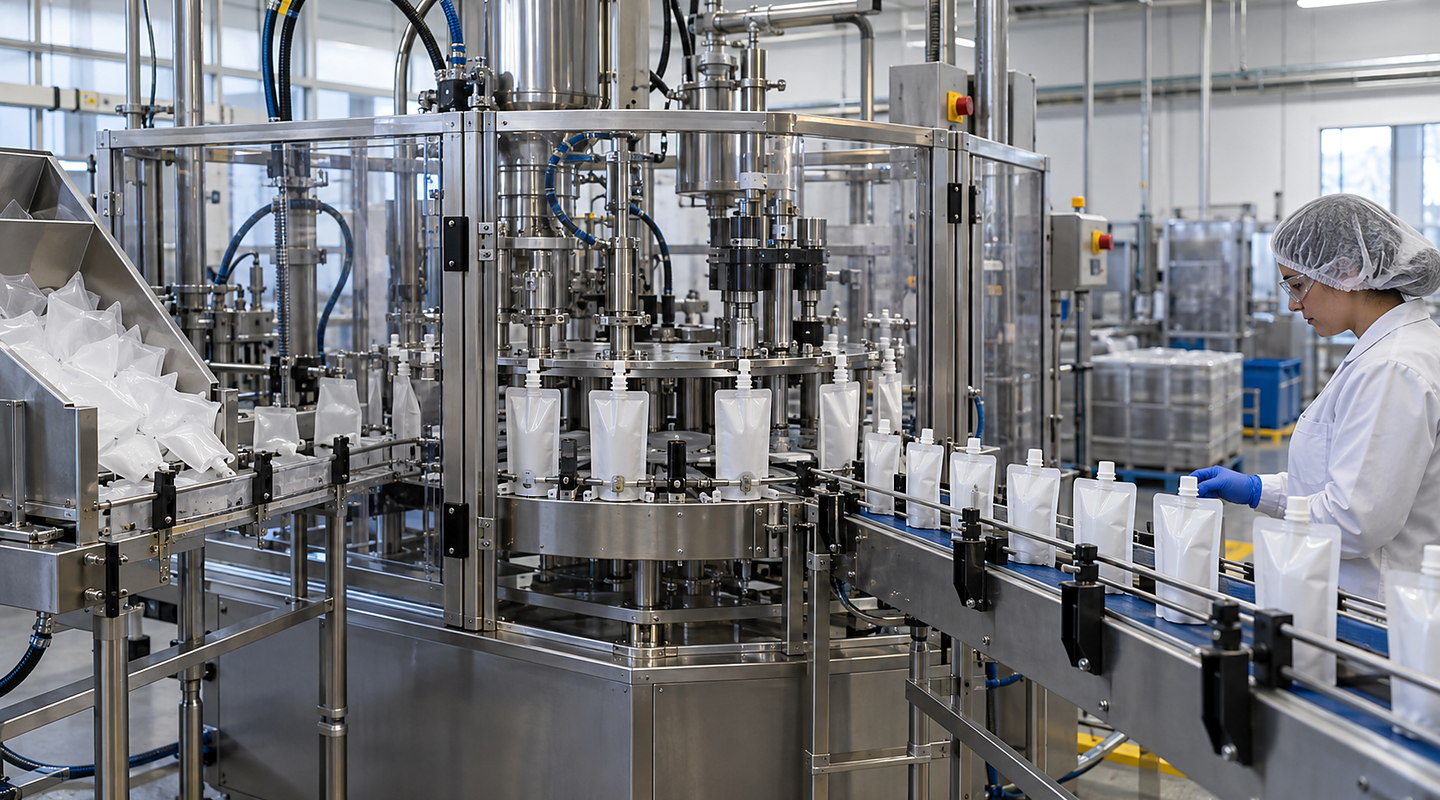
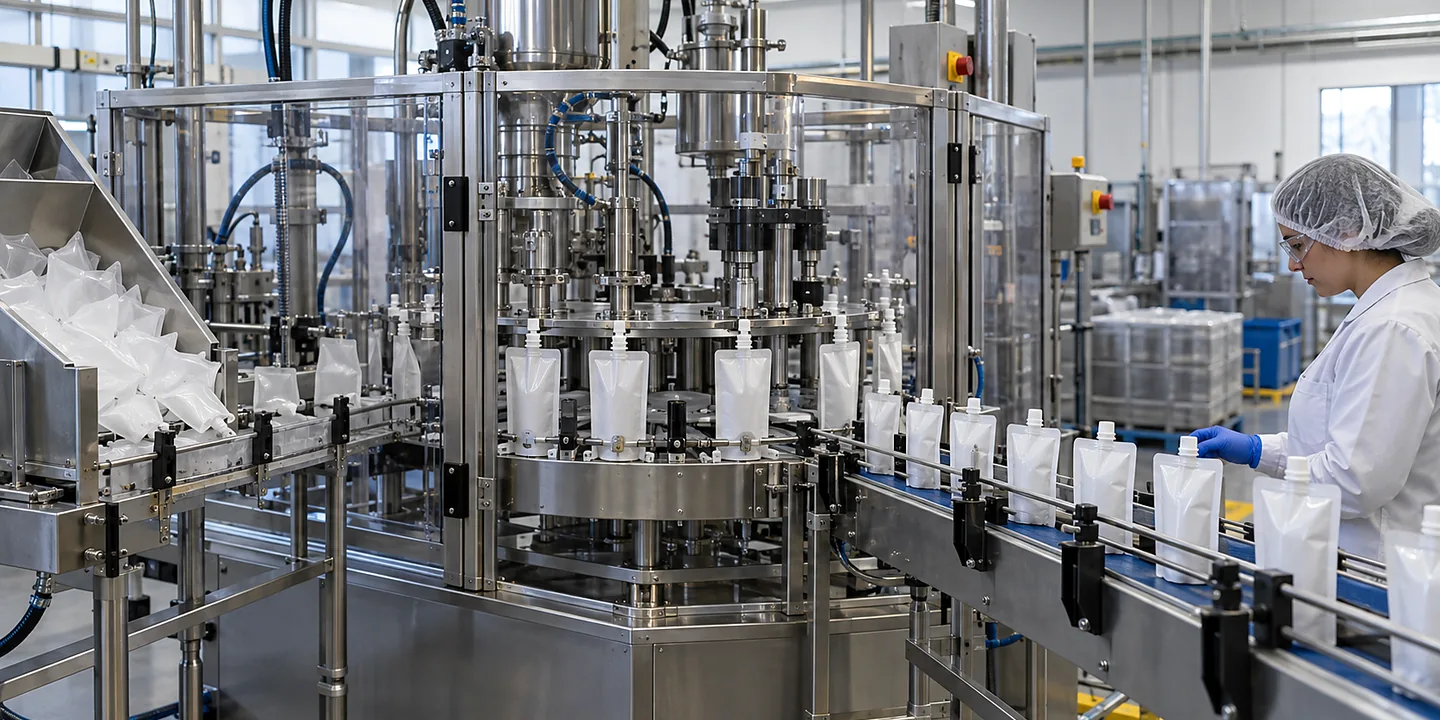
The photograph shows spouted pouches. For a sachet made from reel film, send Lancing a pack drawing or sample with the film structure and target dose.
Quick answer
Which sachet filler suits our liquid and required dose?
Provide the liquid properties, filling temperature and minimum and maximum doses, together with the sachet film. Trial product delivery and cut-off within the forming and sealing cycle. Check fill results, contamination of the seal area and the finished pack, including the intended cleaning and product-change sequence.
Selection criteria
From liquid supply to a completed sachet
Use these decisions to define the proposed equipment and the checks needed for your application.
Decision 1
Describe the liquid at filling
Provide the working temperature, flow behaviour, particles, foaming and any tendency to settle or separate. Include the normal operating range. A sample at room temperature may not represent the condition delivered to the dosing system during production.
Decision 2
Define dose and feed conditions
List the minimum, normal and maximum dose, with the agreed quantity-check method. Show how product reaches the filler and is replenished. Trial the start, stable run and restart so feed variation is included in the results.
Decision 3
Assess nozzle cut-off
Observe drips, strings or splashes between the end of dosing and the next seal. Review nozzle access and the available filling window with the actual liquid. Product delivered accurately can still create an unacceptable pack if it reaches the seal area.
Decision 4
Use production film and artwork
Provide the film specification, reel details, sachet dimensions and printed registration marks where used. Confirm the intended opening feature and code position. The forming, sealing and cutting arrangement must fit the approved finished design.
Decision 5
Check completed pack integrity
Agree how filled sachets will be assessed for quantity, seal condition, leakage, appearance and code readability. Include normal handling after the machine. Retain failed examples with the operating condition so the cause can be investigated.
Decision 6
Compare campaign changeovers
List liquids and film formats used in a normal schedule. Establish the cleaning method, contact-part access, drain-down and first-off release requirements. Trial a representative change where residual product or different viscosity could affect the next run.
Applications
Two useful starting points for sachet liquid fillers
For a continuous run, check what happens when liquid is replenished or the line restarts. For several short runs, also record the drain-down, film change and first accepted sachets between products.
Separate dosing faults from losses during pack formation
Investigate the liquid path and the finished sachet together. The amount released by a dosing unit and the amount retained in an accepted pack can differ if product splashes, trails into a seal or escapes from an incomplete closure.
When every dose changes
Compare the product supply condition, level, replenishment event and temperature with the recorded setup. Check whether air entered the feed during a source change. Use individual results before and after the event rather than averaging the whole run into one apparently acceptable value.
When only one dosing position changes
Keep position identity in the results. Compare its tubing, valves, nozzle and cut-off behaviour with the other positions. A combined output average can hide a consistent low result from one position.
When the dose is right but the sachet leaks
Inspect the forming and closing sequence. Observe the last liquid leaving the nozzle relative to the sealing action, and check whether contamination occurs on a longitudinal or end seal. Retain failed packs with the operating condition and use the approved packaging inspection method.
When restarts create the problem
Record the pause duration and the condition of product held in the dosing path. Agree how priming or first-off packs are identified and removed. Include the response to a film stop, lost registration or unavailable downstream discharge; the filler should not be assessed only during uninterrupted operation.
For a useful comparison, report acceptable completed sachets alongside product loss, rejected film and the reasons for interruption. Use the acceptance-testing resource to keep dose, seal and production-response evidence distinct, then discuss the unresolved fault or format.
Important limits
Know what needs a separate check
The selected method must be trialled with representative product and packaging.
Supplier tolerances and product-condition changes can alter handling or fill behaviour.
Equipment selection does not replace product, hygiene, packaging or regulatory validation.
Your final solution for liquid sachet filling and sealing must reflect the law, current standards and site-specific risks that apply to your installation.