In brief

For routine liquid sachet production, assess accepted finished packs over the stated production pattern, including replenishment and restarts. Check dose delivery, liquid retained in the sachet and seal condition separately so an acceptable average does not hide a recurring problem.

The product-behaviour guide helps record the liquid conditions behind the results. Use the same pack checks and agreed limits at start-up, during the run and after a planned pause.

On the production floor

Plan for the conditions your team handles every day — Sachet Liquid Fillers

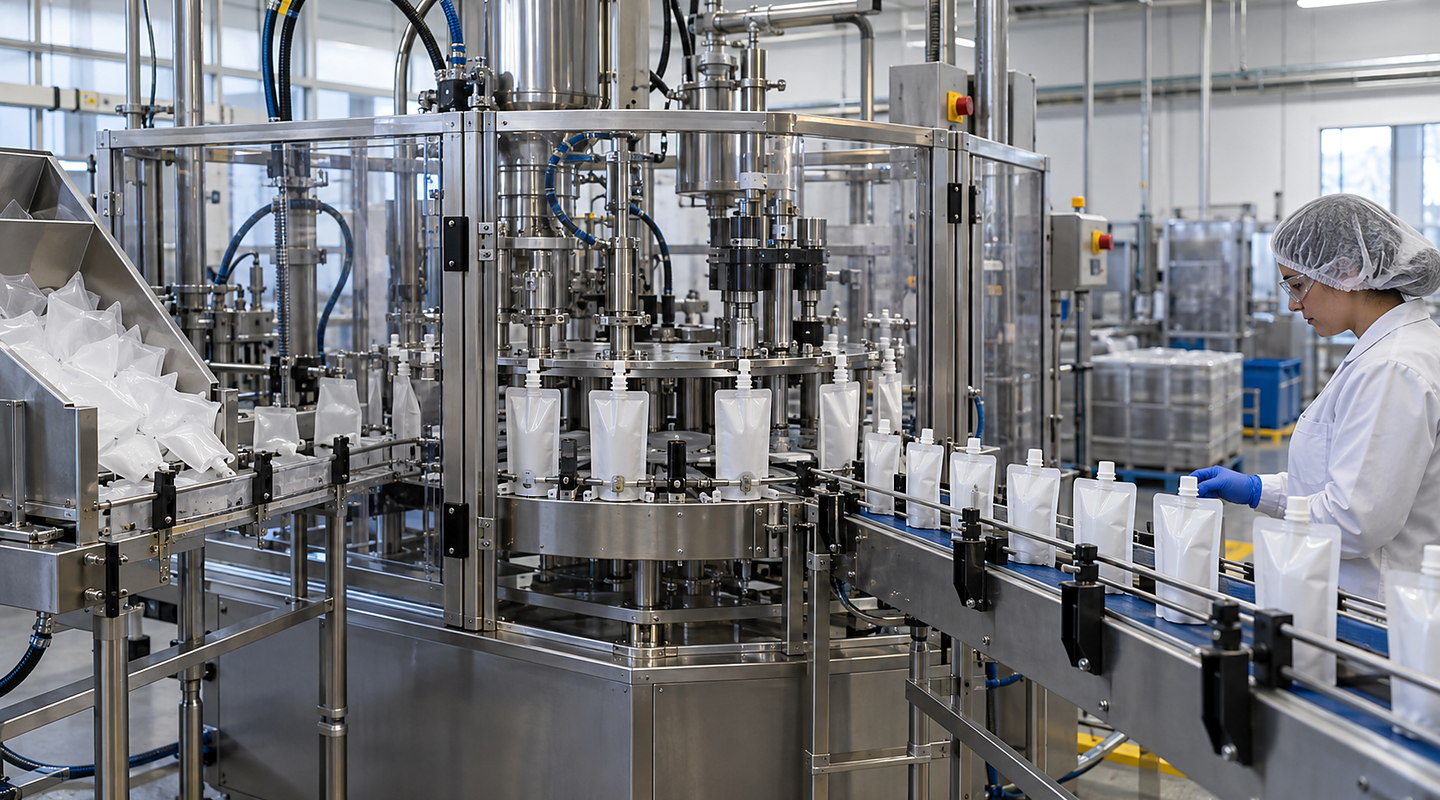
Plan sachet liquid fillers around your product, pack range, target output, cleaning needs and finished-pack checks. Discuss a practical line concept with Lancing using representative samples. For routine production using liquid sachet filling and sealing, the deciding details include liquid sachet filling & sealing product behaviour, target dose, count or pack weight and finished-pack checks and reject handling.

Discuss your application
Your application

Details worth resolving early for routine production using liquid sachet filling and sealing

Question 1

Liquid Sachet Filling & Sealing Product Behaviour

State filling temperature, flow behaviour, particles, foaming and any settling or separation. Record how the product is supplied and replenished, and keep the condition attached to each trial result so a change in supply is distinguishable from a filling-position problem.

Question 2

Production film and pack size

Use the intended film, reel details and finished sachet dimensions. For printed film, record the registration mark, cut and code positions on an accepted pack.

Question 3

Target Dose, Count or Pack Weight

List minimum, normal and maximum doses and the agreed checking method and limits. Keep individual results and, where the proposed arrangement has multiple filling positions, identify the position rather than combining all results into one average.

Question 4

Required Output and Production Pattern

Describe run length, replenishment, pauses and product changes. Count acceptable completed sachets alongside rejected packs, liquid loss, rejected film and interruption reasons; a short stable filling period does not describe the whole production duty.

Question 5

Cleaning and restart

Identify the parts touched by the liquid, how they are drained and cleaned, and which first-off packs must be checked when production resumes.

Question 6

Rejected packs and their cause

Keep individual dose results with the corresponding seal and leak observations. Identify the time and dosing position where relevant so a recurring failure is visible.

Your operating cycle

Plan for more than automatic running

Include replenishment, normal production, planned change, short stops, fault recovery, cleaning and maintenance for routine production using liquid sachet filling and sealing. A fast automatic step can still leave your team with a slow or awkward overall process.

Prove the result

Test routine production using liquid sachet filling and sealing against representative products, packs and difficult production conditions

Normal production

Run the agreed product or part mix for routine production using liquid sachet filling and sealing at your intended operating pattern.

Difficult conditions

Include credible extremes for liquid sachet filling & sealing product behaviour and container, bag or pack range.

Fault and recovery

Agree how operators will recognise and respond to an out-of-limit dose, contaminated seal or interrupted cycle. Define which packs need checking or removal before restart; the required response and any automatic detection must be established for the proposed equipment.

Important limits

Be clear about what the trial has shown

Compare with Short Runs and Format Changes Involving Liquid Sachet Filling and Sealing if that operating pattern is closer to your application.