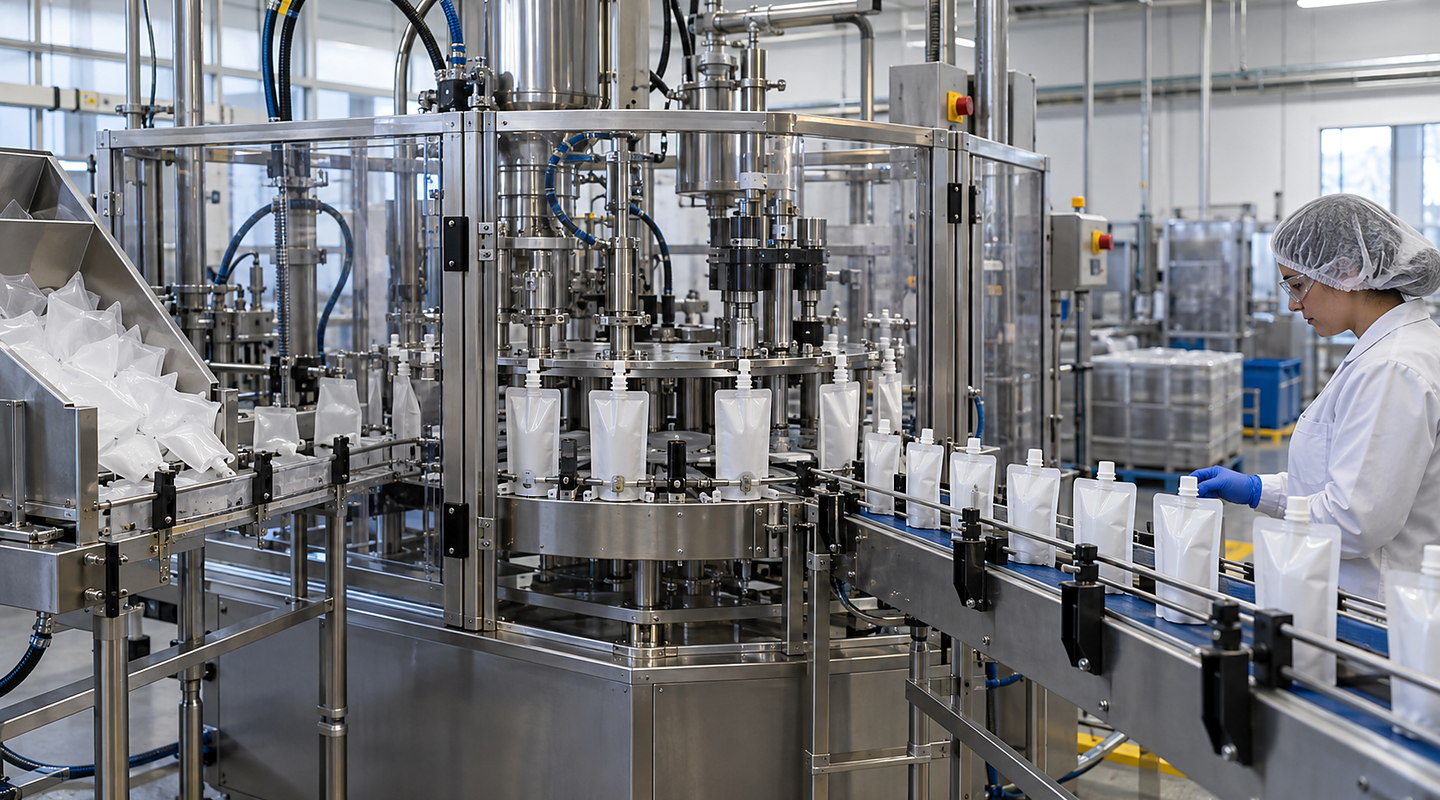
Record liquid and film combinations, finished sachet dimensions, artwork and the first packs to check after a product or format change.
In brief
For a liquid sachet project, define the production film and approved sachet design alongside the liquid and dose. Dimensions alone do not describe the forming and sealing task: reel details, registration where used, opening features and code position also belong in the brief.
List the actual liquid and film combinations and the intended change sequence. Use finished-pack acceptance checks for each agreed representative combination rather than assuming one successful pack proves the whole range.
On the production floor
Turn your production information into clearer decisions — Sachet Liquid Fillers
Plan sachet liquid fillers around your product, pack range, target output, cleaning needs and finished-pack checks. Discuss a practical line concept with Lancing using representative samples. Use this guide to resolve container, bag or pack range before it limits the final system.
Container, Bag or Pack Range: condition, range and effect on your process
Current condition
Record the film specification and reel details, sachet dimensions and approved artwork or drawing revision. Identify registration marks where used, the intended opening feature and code position so samples and trial results refer to the same pack.
Realistic range
List each intended liquid, dose and film combination, including the proposed sequence of format or product changes. Identify which combinations have been demonstrated and which still require a trial; a dimension range alone does not confirm suitability.
Effect on the system
Show which settings, safeguards, maintenance tasks, decisions or required outcomes are affected by changes in container, bag or pack range.
Before you contact us
Five questions about container, bag or pack range for your application
Who can confirm this information?Identify the person responsible for container, bag or pack range in production, quality, engineering or operations.
How representative is the sample?Include age, supplier, batch, environment and upstream process state where they affect sachet liquid fillers.
What is the difficult condition?Include a representative pack combination where liquid trails or splashes could reach the seal area, or where a film stop or registration change affects restart. Retain the affected sachet with its liquid, film and operating details.
How will you judge the result?Agree the method, repetitions, acceptable range, result record and the response if the observed result falls outside the agreed range.
What else must be coordinated?Your final sachet liquid fillers scope must also account for cleaning, access and changeover method, finished-pack checks and reject handling, current regulations and the conditions at your site.
Connected details
Build the product, film and changeover matrix
Question 1
Liquid and film pair
List each liquid against the production film proposed for it. Include the filling temperature and identify combinations that still need a trial.
Question 2
Sachet drawing and reel
For each format, record the drawing or artwork revision, finished width and length, reel information, registration mark and intended opening feature.
Question 3
Dose for each format
Add the target quantity and unit for each liquid and pack combination. Record the permitted variation or mark it for agreement.
Question 4
Production sequence
List the order in which products and formats normally run, the required accepted rate and which change most often interrupts production.
Question 5
Change and cleaning record
Describe what the operator changes, which liquid remains in the feed path and how the first usable packs are identified. Record lost liquid or film separately.
Question 6
Release the new format
Retain representative first packs after the format change. Check the dose, seal, leak, print and opening against the agreed finish and record who releases the run.